Top 10 Industries Using Google Ads for Lead Generation
From contractors and plumbers to healthcare practices and attorneys, these industries compete for Google searches that can turn into calls, estimates, consultations, appointments and qualified opportunities.
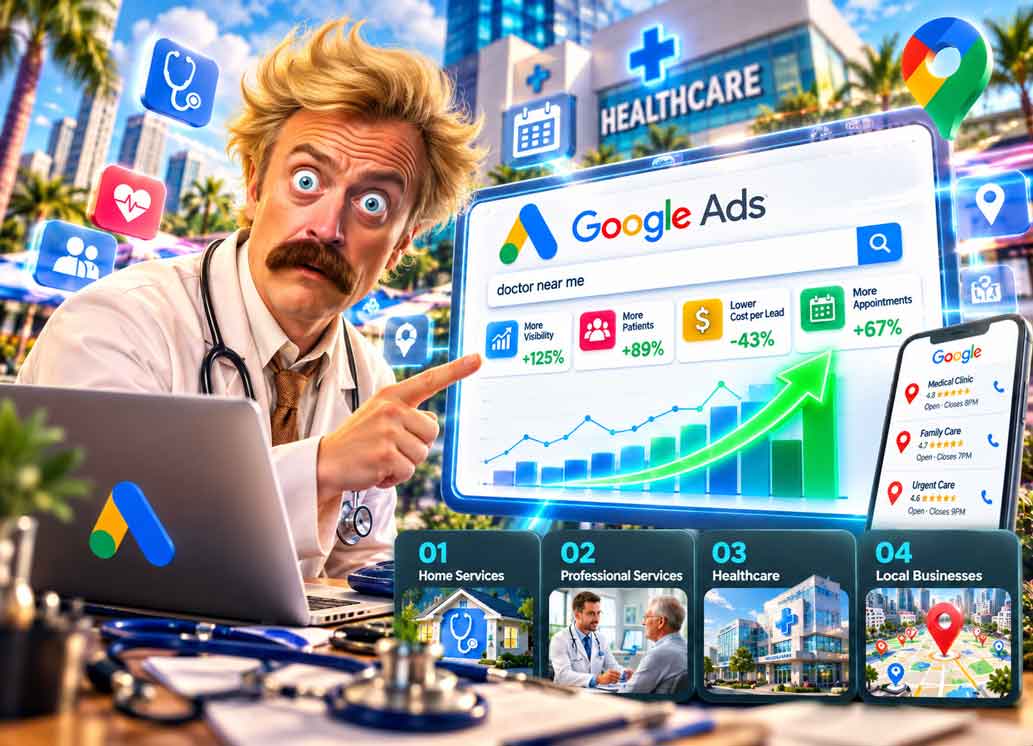
Google Ads for lead generation can be particularly useful when customers already know what they need and are actively searching for a business capable of providing it.
A homeowner searching for an emergency plumber is different from someone casually reading about plumbing. A patient searching for a local healthcare provider is different from someone researching a general health topic.
That difference is buyer intent—and it is one of the most important factors behind a lead-generation campaign.
The objective is to connect the right search with the right service, geographic market, landing experience and next action.
10 Industries Where Google Searches Can Turn Into Leads
Below are ten industries where search behavior can carry strong commercial intent. Watch the search examples under each industry: they rotate through the types of questions and problems a prospective customer may actually type into Google.
Construction Companies & General Contractors
Construction companies can compete for renovation, commercial construction, remodeling and general contractor searches where a prospective customer may already be planning a project and comparing companies.
Plumbing Companies
Plumbing is a strong example of problem-driven search behavior. Customers experiencing leaks, drain problems or failed water heaters may be looking for someone capable of responding quickly.
Painting Companies
Painting companies can reach homeowners and businesses actively researching interior, exterior, residential and commercial painting services and requesting estimates.
HVAC Companies
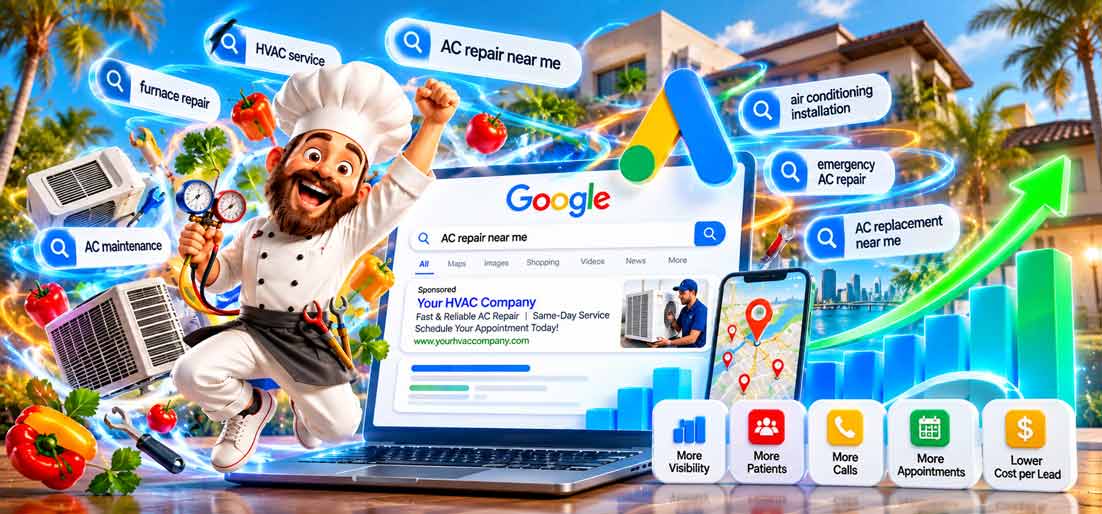
HVAC searches can become highly action-oriented when an air conditioner stops cooling, a system needs repair or a property owner begins comparing replacement options.
Roofing Companies
Roofing searches may involve repairs, replacement, inspections, leaks or storm-related problems. Because project values can be significant, qualified lead quality is particularly important.
The Industry Changes. The Customer Journey Does Not.
Whether someone needs a contractor, doctor, dentist or attorney, the basic sequence is similar: problem → search → comparison → trust → action.
Healthcare & Medical Practices
Healthcare organizations may use paid search to reach prospective patients searching for providers, specific services or appointments, subject to applicable advertising and privacy requirements.
Dental Practices
Dental search behavior can include routine care, emergency needs, cosmetic services and people actively searching for a new local provider.
Law Firms & Attorneys
Legal searches can represent strong consultation intent when someone is actively looking for professional help related to a specific legal matter.
Auto Repair & Automotive Services
Automotive businesses can reach drivers searching for diagnostics, maintenance, repairs and specific vehicle services within their local market.
Real Estate & Property Services
Real estate professionals can reach people searching for agents, property guidance and local market assistance while preparing for a purchase, sale or other property decision.
Why Can a Business Pay for Google Ads and Still Not Get Customers?
Paying Google for traffic does not automatically create a qualified customer journey.
A campaign can generate impressions and clicks while losing potential customers because the search intent, geography, advertisement, landing page or next action does not align.
“How Can We Get More Clicks?”
For lead generation, the better question is: “How can we reach more of the right prospective customers and help them take the appropriate next action?”
Google Ads Should Match the Customer's Stage
| Search Stage | Example | Intent | Best Next Step |
|---|---|---|---|
| Research | “How much does roof replacement cost?” | Learning / comparison | Useful service and cost information |
| Solution Aware | “roof replacement company” | Looking for provider | Relevant service page |
| Local | “roofing company near me” | Local provider discovery | Location relevance + service |
| Ready to Act | “roof replacement estimate near me” | Commercial / transactional | Estimate request or call |
Google Ads and SEO Should Solve Different Parts of the Search Journey
Google Ads provides paid visibility while an advertising campaign is active. SEO develops organic search assets, content relationships, geographic relevance and long-term discoverability.
Businesses competing locally can also strengthen their broader search presence through Local SEO .
Instead of asking whether SEO or Google Ads is universally “better,” businesses should determine which channel serves each stage of their customer-acquisition strategy.
Traffic is not the final objective. The objective is qualified visibility that can become a meaningful business opportunity.
Questions About Google Ads for Lead Generation
Which industries can benefit from Google Ads?
Industries with active search demand and clear commercial actions, including calls, estimates, appointments and consultations, may be strong candidates. Performance depends on the specific market, competition, targeting and customer journey.
Why am I paying for Google Ads but not getting customers?
Possible causes include weak search intent, irrelevant search terms, geographic mismatch, poor landing-page relevance, unclear calls to action or other conversion friction.
What matters more: Google Ads clicks or qualified leads?
For a lead-generation campaign, qualified business opportunities are generally more meaningful than raw click volume.
Should contractors use Google Ads?
Paid search can help contractors reach people actively searching for construction, remodeling and related project services. Campaigns should prioritize qualified project intent.
Do Google Ads work for plumbers?
Plumbing can involve urgent local search intent. The value depends on targeting the correct services and geography and providing an easy path to contact the business.
Can healthcare providers use Google Ads?
Eligible healthcare organizations may advertise applicable services, subject to Google's policies and any relevant privacy, advertising or industry requirements.
Should Google Ads traffic go to my homepage?
Not automatically. A dedicated service or landing page may better answer the search when the advertisement targets a specific customer need.
Should I stop SEO if Google Ads produces leads?
Not necessarily. Paid search and SEO perform different functions. Paid visibility depends on advertising activity, while SEO develops organic search assets and discoverability over time.
How can I tell if my Google Ads budget is being wasted?
Evaluate the actual search terms, geographic quality, conversion actions, landing-page behavior and quality of resulting inquiries rather than judging the campaign from clicks alone.
Does a fast website matter for Google Ads?
Yes. Performance and usability affect the post-click experience. Visitors who cannot quickly access or understand the page may leave before taking action.
Can Google Ads guarantee customers?
No responsible agency should guarantee a specific number of customers. Advertising can create visibility and opportunities, but outcomes depend on market, competition, targeting, offer, business operations and other factors.
What should I track besides clicks?
Depending on the business, useful measurements can include qualified calls, estimate requests, appointment actions, consultations and the quality of the resulting leads.
The Best Google Ads Campaign Starts With the Customer's Search
Construction, plumbing, painting, HVAC, roofing, healthcare, dental, legal, automotive and real estate businesses serve very different customers.
But their strongest search opportunities often follow the same pattern:
A problem exists → the customer searches → evaluates options → builds trust → takes action.
That is why Google Ads for lead generation should be built around qualified buyer intent, not simply traffic volume.
Paying for Google Ads but Still Asking, “Where Are the Customers?”
SMG Creativos can evaluate the search journey—from what prospective customers type into Google to targeting, landing-page relevance, local visibility and the conversion path—to identify where qualified opportunities may be getting lost.
Discuss Your Lead Generation Strategy