Why Google Ads Matter for Dentists
Patients often search Google when they need a dentist, have a dental problem or are comparing local practices. The opportunity is not simply getting the click—it is connecting patient intent with the right dental service and a clear path to an appointment.
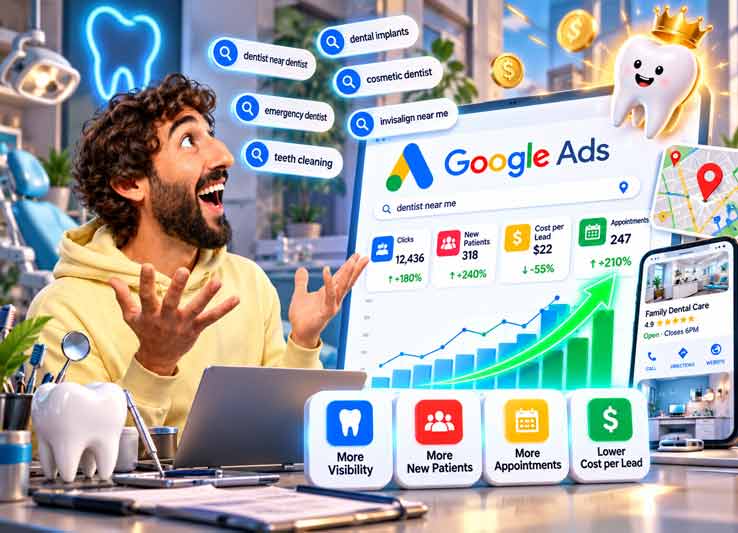
Google Ads for dentists matters because dental care often begins with a search. A prospective patient may not know which practice to contact, but they frequently know the problem they need solved.
They may search for a dentist accepting new patients, emergency dental care, a broken tooth, cosmetic dentistry, an exam or another specific dental service.
For a dental practice, this creates an important distinction: Google Ads is not simply an advertising channel—it can be a way to reach people at the moment they are actively evaluating dental care.
Google Ads can help an eligible dental practice appear for relevant searches when prospective patients are actively looking for a dentist or dental service. The quality of the opportunity depends on search intent, geographic targeting, service relevance, landing-page experience and how easily the patient can take the next step.
The Dental Patient Journey Often Starts Before the Phone Call
Consider what happens before a new patient contacts a dental practice.
The patient may first recognize a problem. Then they search Google, compare practices, evaluate location and services, review the website and decide whether the practice appears relevant to their need.
That makes the complete digital journey important—not merely the advertisement itself.
What Is the Prospective Patient Actually Searching For?
Dental searches can reveal very different levels of urgency, awareness and readiness to schedule.
7 Reasons Google Ads Can Matter for a Dental Practice
Reach People Already Searching for Dental Care
Search advertising differs from interruptive advertising because the prospective patient may already be actively looking for the service. The practice is responding to existing demand rather than trying to manufacture a dental need.
Focus on Patients in the Appropriate Geographic Market
Dental care is strongly local. Campaign geography should align with the realistic area from which the practice wants to attract patients rather than paying for irrelevant traffic far outside the practical market.
Match Ads to Specific Dental Needs
Someone searching for emergency dental care has a different need from someone researching routine exams or cosmetic services. Campaigns and landing pages should reflect those differences.
Turn Search Intent Into a Clear Next Action
The post-click experience should make it easy to understand the service, practice, location and appropriate next step—such as calling or requesting an appointment.
Measure More Than Impressions and Clicks
A dental practice ultimately needs meaningful patient opportunities, not vanity metrics. Measurement should focus on appropriate conversion actions and the quality of resulting inquiries.
Support Organic Visibility With Paid Search
Paid advertising and SEO serve different purposes. A practice may use advertising for selected searches while continuing to develop organic and local search visibility over time.
Compete Where Prospective Patients Are Comparing Options
When multiple dental practices serve the same area, the patient may compare several options. Visibility matters, but the practice still needs relevance, clarity and trust after the click.
The Search Term Tells You What the Patient May Need
| Example Search | Possible Intent | Buyer Stage | Useful Next Experience |
|---|---|---|---|
| dentist near me | Find a local provider | Solution aware | Practice + location relevance |
| dentist accepting new patients | Find an available practice | High intent | New-patient information |
| emergency dentist near me | Immediate dental problem | Urgent | Clear emergency-service information |
| cosmetic dentist near me | Compare cosmetic providers | Commercial comparison | Relevant cosmetic dentistry information |
| how much does dental treatment cost? | Research cost | Research / comparison | Transparent explanatory content where appropriate |
Paying for the Click Is Only the Beginning.
If a prospective patient reaches a slow, confusing or irrelevant page, the advertising budget cannot compensate for the weak experience.
Advertisement → Landing Page → Trust → Appointment Path should operate as one connected journey.
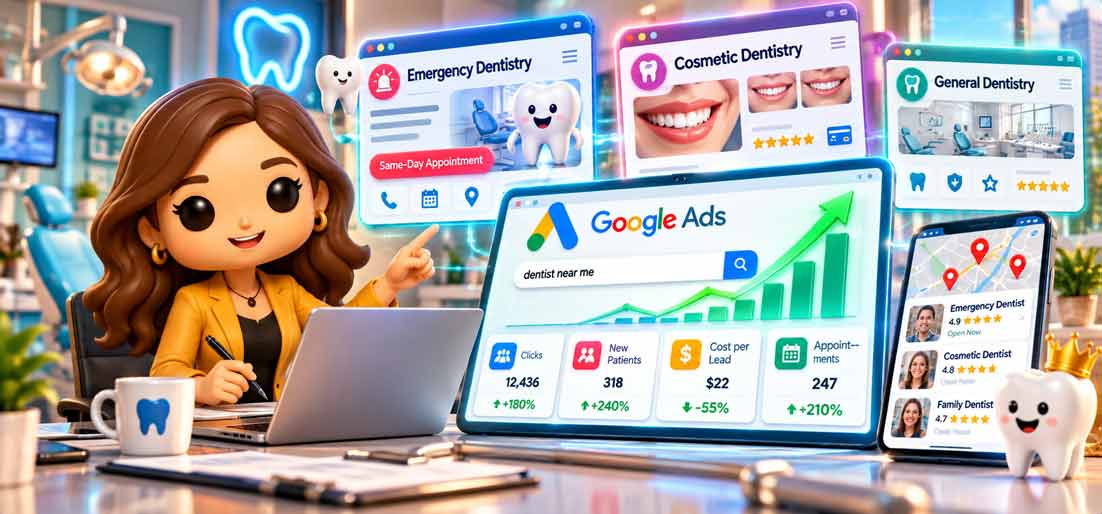
Why Do Some Dentists Pay for Google Ads but Still Struggle to Get New Patients?
An advertisement can generate a click without generating the right patient opportunity.
This can happen when broad or irrelevant searches consume budget, geographic targeting is poorly aligned, the advertisement promises something the landing page does not clearly answer, or the patient cannot easily determine what to do next.
Determine whether the search represents a prospective patient who reasonably matches the service being advertised.
Advertising should align with the practical patient market and actual practice location or service area.
Someone searching for a specific dental service should reach information that directly addresses that service.
Practice information, legitimate credentials where applicable, location, service details and a professional user experience help the patient evaluate the practice.
The appropriate next action should be easy to identify and complete, whether that is a phone call or appointment request.
Google Ads vs. SEO for Dentists
A dental practice does not necessarily need to choose between paid search and organic search as though they perform the same job.
| Channel | Primary Purpose | Strength | Important Consideration |
|---|---|---|---|
| Google Ads | Paid search visibility | Reach selected searches while campaigns are active | Requires advertising budget and management |
| Dental SEO | Organic search visibility | Develop relevant search presence over time | Requires ongoing work and authority development |
| Local SEO | Geographic relevance | Support local discovery | Business information and local signals must remain accurate |
| Website | Trust + conversion | Help patients understand and choose | Must answer the patient's actual intent |
Why Dental Practices Should Not Depend Only on Paid Traffic
Paid search can create visibility for selected searches while the advertising campaign is active. Organic search works differently.
Developing useful service pages, local relevance and helpful patient information can strengthen the practice's broader search presence over time.
This is where a coordinated Local SEO strategy can complement paid acquisition rather than compete with it.
Each channel has a different job, but the patient experiences them as one brand.
What Should a Dental Google Ads Landing Page Answer?
Before asking a patient to schedule, the page should make the important information easy to understand.
Am I in the Right Place?
Immediately identify the dental service and practice relevance.
Do They Provide the Service I Need?
Match the landing page to the service or patient need represented by the advertisement.
Are They Relevant to My Location?
Clearly communicate legitimate location information and geographic relevance.
Why Should I Trust This Practice?
Use accurate practice information and legitimate evidence rather than generic or fabricated trust claims.
What Do I Do Next?
Make the appropriate appointment or contact path easy to identify.
Patient Search → Intent → Relevant Answer → Trust → Appointment
A dental campaign should not be designed merely to increase website traffic. It should help the appropriate prospective patient move from a relevant Google search toward an informed next action.
Questions Dentists Ask About Google Ads
Do Google Ads work for dentists?
Google Ads can help eligible dental practices reach prospective patients searching for relevant dental services. Results depend on factors including market demand, competition, targeting, landing-page relevance, budget and campaign execution.
Why are Google Ads useful for dental practices?
Search ads can appear when a person is already looking for a dentist or dental service, which can make the channel relevant for intent-driven patient acquisition.
What should dentists advertise on Google?
Campaign structure should reflect the legitimate services offered by the practice and the searches of prospective patients. Different services may require different advertisements and landing experiences.
Can dentists advertise emergency dental services?
Practices offering applicable emergency dental services may consider relevant search advertising, subject to Google Ads policies and other applicable requirements.
Why am I getting clicks but not new dental patients?
Possible causes include irrelevant search traffic, geographic mismatch, weak service-to-page alignment, poor user experience, unclear appointment paths or inquiries that do not match the practice's intended patient profile.
Should a dentist send Google Ads traffic to the homepage?
Not automatically. When an advertisement targets a specific service, a relevant service or landing page can provide a clearer answer to the prospective patient's search.
Should dentists use SEO and Google Ads together?
They can serve complementary roles. Google Ads provides paid search visibility, while SEO develops organic search visibility and useful search assets over time.
Is Local SEO important for dentists?
Local visibility can be particularly relevant for dental practices because patients frequently consider geographic proximity when choosing a provider.
What should a dental practice measure in Google Ads?
Depending on the campaign, useful measurements can include appropriate appointment actions, qualified calls and other meaningful patient inquiries—not simply impressions and clicks.
Can Google Ads guarantee new dental patients?
No. Advertising can create visibility and opportunities, but patient acquisition cannot responsibly be guaranteed because outcomes depend on multiple market, campaign and business factors.
Does website speed matter for dental advertising?
Yes. A slow or difficult mobile experience can create friction after the click and make it harder for prospective patients to access the information they need.
Are mobile users important for dental Google Ads?
Dental landing pages should work well across devices because prospective patients may search and contact practices from mobile devices as well as desktops.
What is the biggest mistake dentists make with Google Ads?
One major mistake is treating traffic as the objective. A stronger strategy connects search intent, the correct service, location, landing-page relevance, trust and a measurable next action.
How can a dentist improve Google Ads lead quality?
Lead quality can be evaluated by reviewing search terms, geographic targeting, service relevance, landing-page alignment and whether resulting inquiries match the practice's intended patient profile.
Does a dentist still need a good website when using Google Ads?
Yes. The advertisement can generate the visit, but the website or landing page still needs to answer the patient's questions, establish legitimate trust and make the next action clear.
Google Ads for Dentists Is Really About Patient Intent
The most important question is not simply whether a dental practice should advertise on Google.
The stronger question is whether the practice can identify the searches that represent the right prospective patients and create a useful, trustworthy experience after those searches occur.
That is the difference between purchasing clicks and developing a patient-acquisition strategy built around search intent.
Getting Dental Ad Clicks but Not Enough Qualified Patient Inquiries?
SMG Creativos can evaluate the search journey—from patient intent and Google Ads targeting to landing-page relevance, local search visibility and conversion paths—to identify where opportunities may be getting lost.
Discuss Your Dental Marketing Strategy